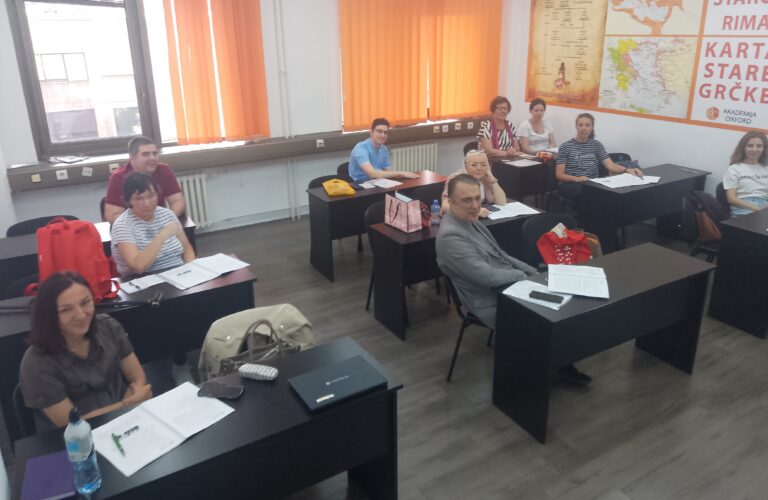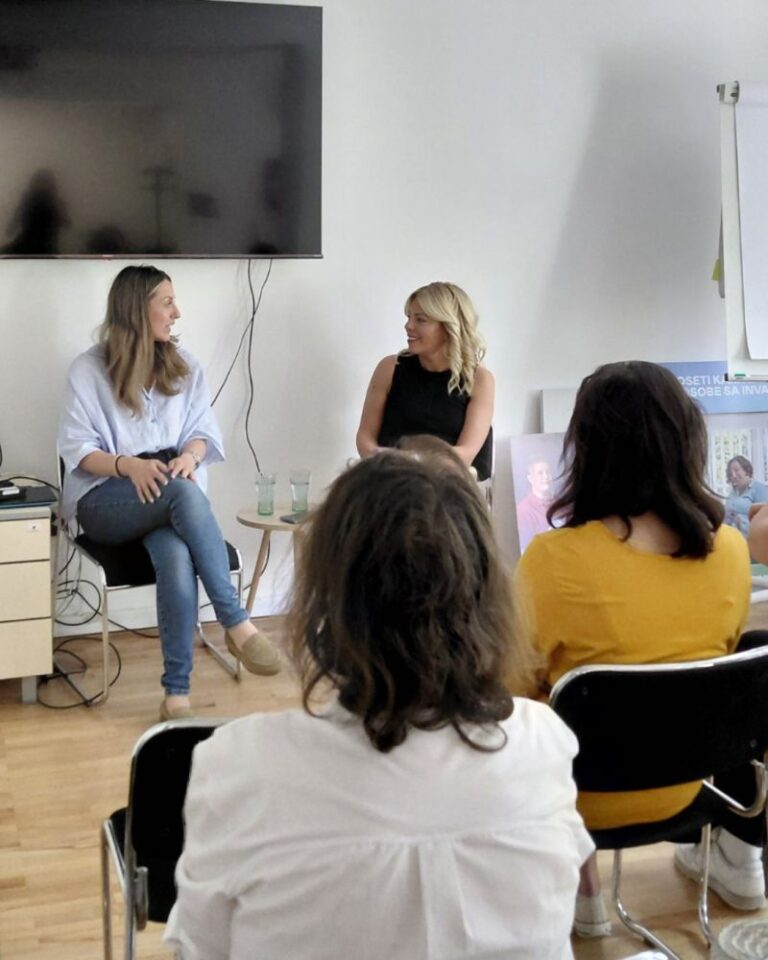
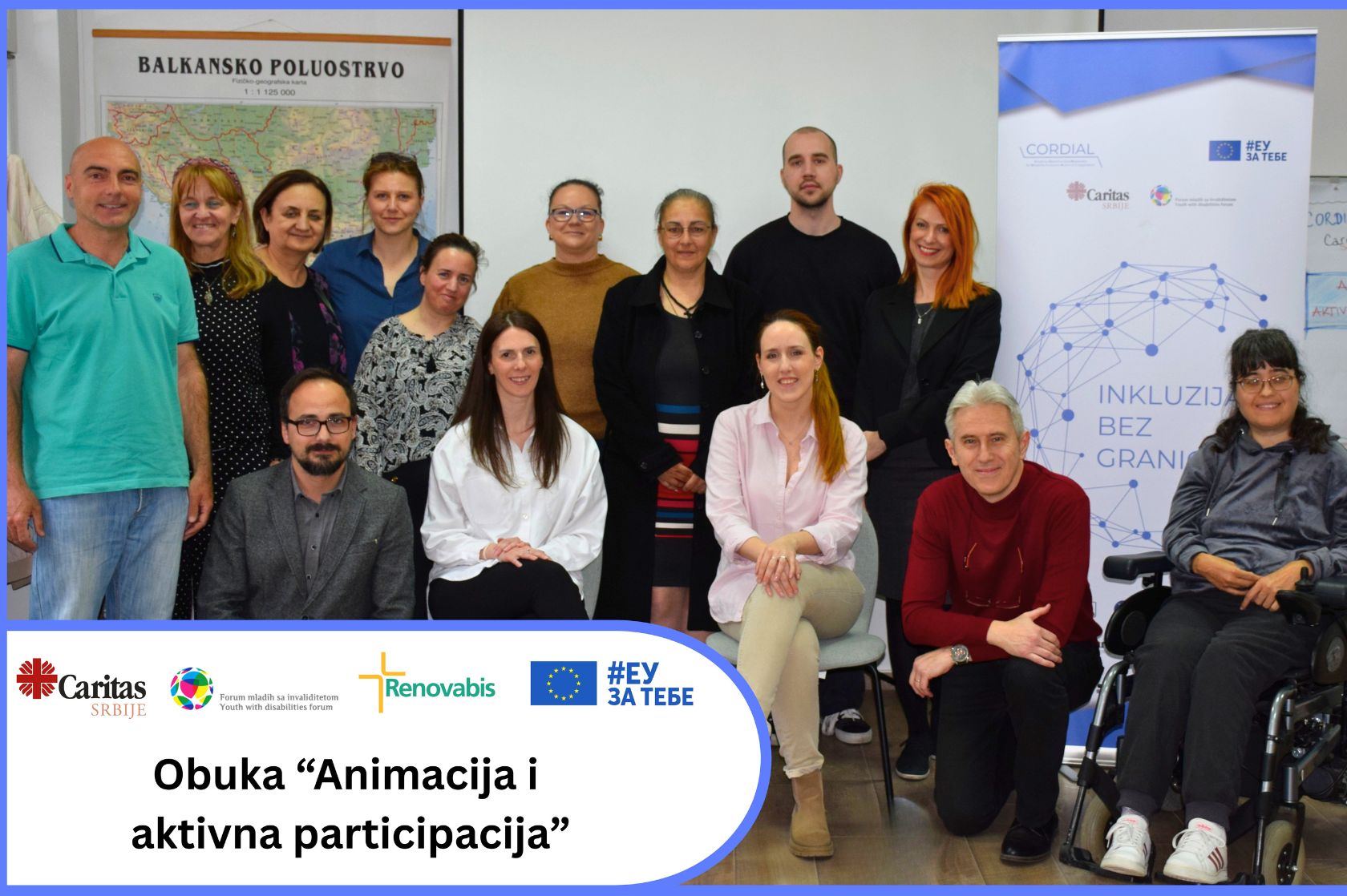
A two‑day training course titled “Community Outreach and Active Participation” was held in Belgrade on March 24–25, 2026, organized by Youth with Disabilities Forum and Caritas Serbia, within the framework of the regional project CORDIAL – Inclusion Without Borders, supported by the European Union and Renovabis.
The training brought together representatives of civil society organizations working with and for persons with disabilities, with the aim of strengthening their capacities to foster active participation of members, develop inclusive practices, and improve internal policies in line with the principles of participation and democratic decision‑making.
The training was led by Milica Vasilijić, and over the course of two days participants enhanced their knowledge and skills through interactive sessions, group work, and practical exercises. Special emphasis was placed on:
- understanding and applying the principles of participation, inclusivity, and intersectionality in organizational work;
- developing practical skills in stakeholder mapping, community mobilization, and identifying opportunities for cooperation;
- drafting internal policies based on democratic working and decision‑making practices, including the introduction of codes of conduct and ethical standards that encourage active participation of members and service users;
- strengthening capacities for cooperation with service users in the planning, development, and monitoring of services.
Through experience sharing and work on concrete case examples, participants developed practical tools they can apply in the future work of their organizations.
Participants highlighted the importance of such trainings not only for organizational development, but also for networking and mutual exchange among organizations.
This training also marked the final activity in a series of capacity‑building efforts implemented within the CORDIAL – Inclusion Without Borders project. The successful completion of this training cycle significantly contributed to strengthening organizational capacities, improving cooperation, and fostering knowledge exchange, thereby laying a solid foundation for the further development of inclusive initiatives and sustainable work in the field of the rights of persons with disabilities.